
A year ago today (27th June 2024) my paternal grandmother passed away. Like every bubu (pronounced mbumbu; Fijian for grandmother), our relationship consisted of lectures and prayers, which I tended to ignore most times. It’s only when I was away from her that I realized the impact she had on my own psyche and I’ve come to appreciate her teachings.
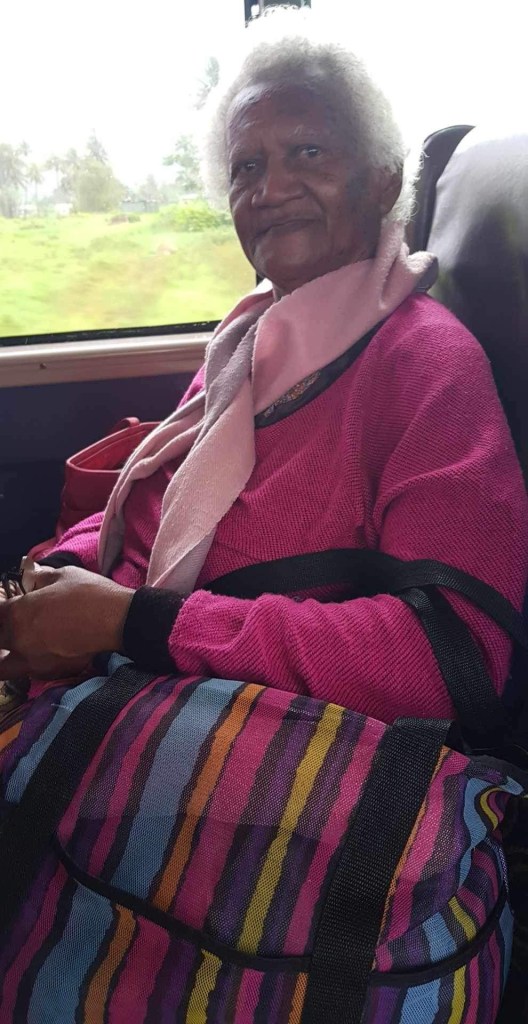
When I found that she had passed I chose to come back to celebrate her life and decided then to observe the tabu for the bogi drau—a traditional period of mourning for a 100 nights—as a way of paying my respects.
The tabu entailed that I refrained from cutting my hair or shaving my beard during this time and I couldn’t help but put my psychological cap on and do some self-reflections as I went through this process. I thought it interesting enough that I shared what I observed during that time.
This isn’t going to be your typical anthropological perspective that we usually get when talking about traditional protocols—detailed accounts of cultural protocols—though I may include some practices that were done before, during, and at the end of the tabu period. Instead, this will be a psychological review of my own thoughts—my thought processes—and observations I made of how people interacted with me during this period.
Now I must warn you, like most psychological literature out there, I may not have the answers but I sure do have a lot of questions.
Self-Reflections
Physical Appearances
As the tabu progressed and my hair grew longer, I immediately began to be aware of my appearance. I had grown my hair out before but I usually had an “upkeep” schedule where I would trim my beard and shape my hair. For the tabu I couldn’t do either. I looked wild!
Whenever I was getting ready to leave the house, I would be hyper aware about the way I looked. What would people think about my hair and beard?
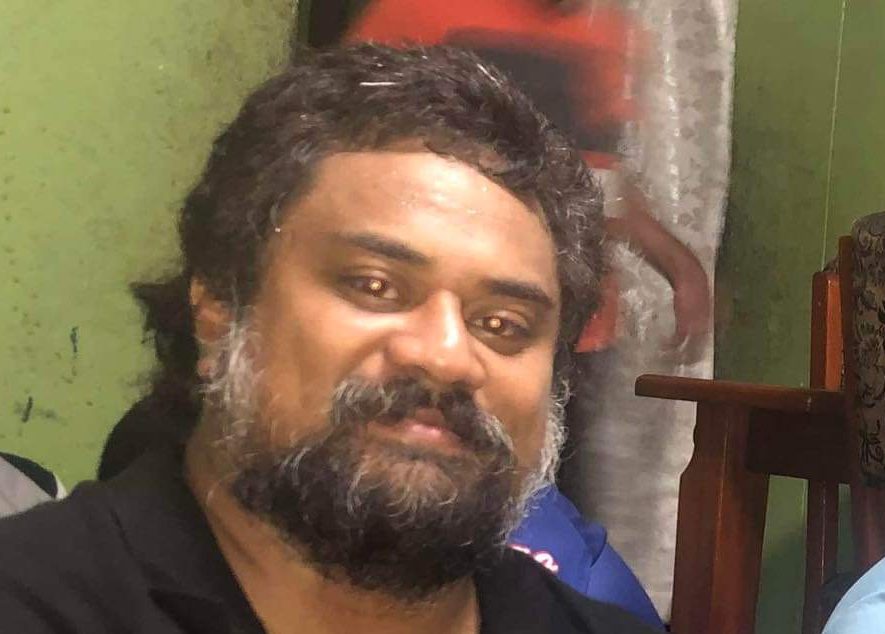
I started to rehearse how I would respond to enquiries into how I looked.
Then I started every conversation with an apology about the way I looked.
But why was that? Why did I feel the need to apologize about the way I looked? Why did I feel the need to explain my appearance?
These were the questions that started my self-reflection.
I thought about the significance of the tabu itself. It was a time of remembrance and grief for loved ones—in this case, my grandmother.
This was a physical manifestation of my grief for her. This outward appearance was symbolic of that grief. What an interesting insight!
Stigma
I knew society had biases surrounding long, unkept hair and beards because I’d had (work in progress) the same biases towards people that fell into that category.
I could feel people staring at me. Interestingly enough, I felt that I got the most questioning glances at church. Was there something there to investigate further? There probably was but I feared what I’d find if I took that road. I did pull a biblical comparison for assurances that this wasn’t as unprecedented as modern church standards set—John the Baptist. No wonder he spent his days in the wilderness, shunned from public places.
I probably looked like a wild man in the middle of modern society!
But why is there stigma towards facial hair in Fiji? Pre-colonial descriptions and pictures, held that a full head of hair was a sign of status and authority. When did we start to look down on that?
I’ve also noted there seems to be a correlation between indigenous rights advocates and reverting to a full head of hair nowadays. Do we associate a full beard and buiniga (traditional style of hair that resembles an afro) with cultural revival? If so, then why?
The Psychology of Tabu?
I also spent some time wondering about the psychological grounding of the practice of tabu in the context of the mourning period.
During this period I constantly had a sense of humility—sometimes self-induced as I remembered why I was doing this and oftentimes socially-induced by the stares and questions as well as the approval of the family members that were aware of what I was doing. Was this, then, something that our forefathers knew would happen to the tabu observer?
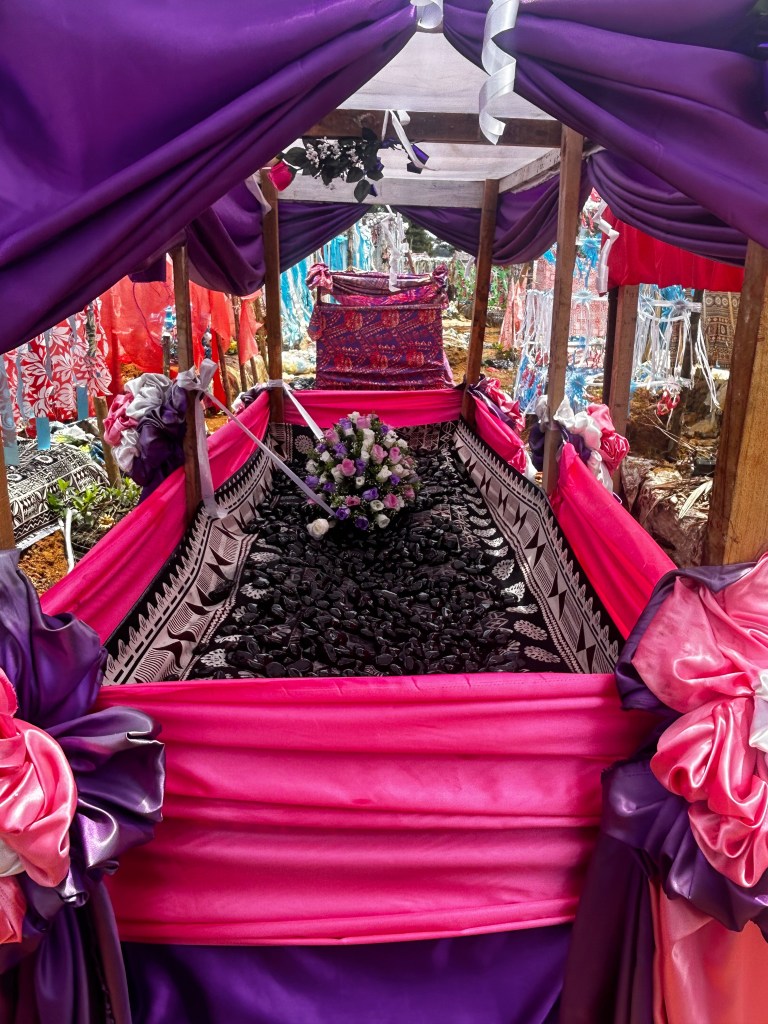
I must admit that when the vakataraisulu ceremony—the end of the bogi drau and when the tabu is lifted—was complete and I was able to cut my hair, I felt like a burden was lifted from my shoulders. Did the symbolic tabu have a psychological effect on my well-being that was immediately lifted when the symbolic lifting occur? To draw from my own experiences, I would answer yes. Since that’s the case, what psychological underpinnings governs this? I certainly felt like a new man at the end of the vakataraisulu. The ceremony itself was in stark contrast to the funeral and subsequent tabu period, filled with song and dance.
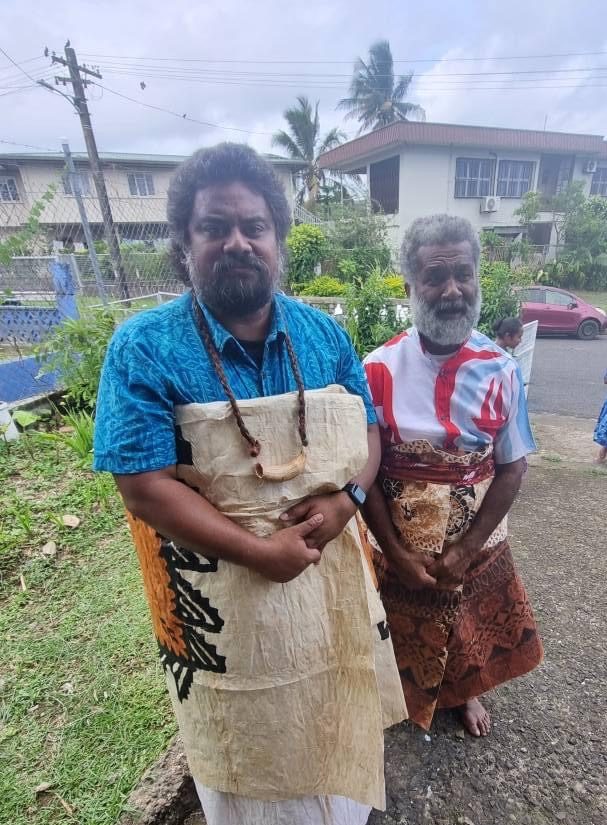
An interdisciplinary (socio-anthro-psychological) aspect I was quite taken in with was how structured the vakataraisulu protocol was. It included members of certain branches of the family, based on their relationship with my grandmother, symbolically cut the hair and beard of those that participated in the tabu— an uncle and I. We, the tabu observers, presented masi and tabua (bark cloth and whale’s tooth respectively; highly prized items in iTaukei culture) to my grandfather.
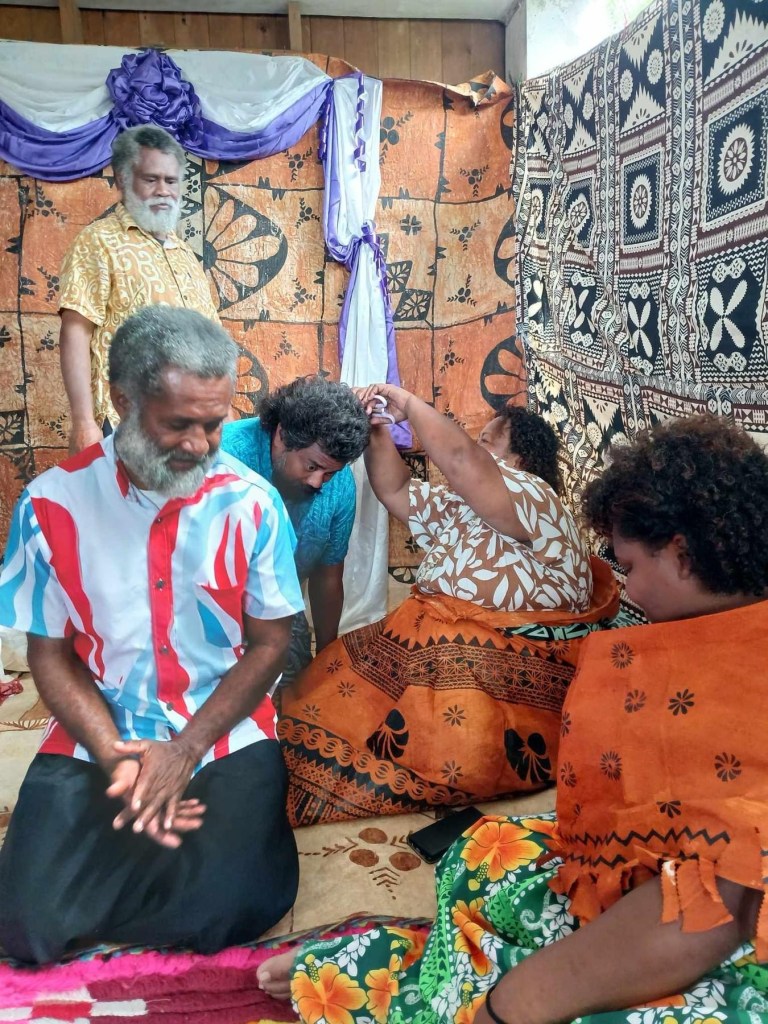
I don’t want to dwell too much on the actual practice—as I had mentioned, this isn’t an anthropological analysis—but I couldn’t help but notice the psychological underpinnings of such a solemn ceremony. The different branches of the family, with their respective roles in the ceremony based on relational systems, were able to collectively come together to symbolically console with each other. A space was created for everyone present to mourn, pay respects, and celebrate as a family. Each person present was included through their connections to the deceased. I thought it represented our communal culture where we are more inclined to do things in groups, which in this case, was to mourn together.
Again, sage wisdom or am I just reading too deep into things?
But then, why a 100 nights? Isn’t that the perfect period for a family and individuals to properly mourn the loss of a loved one? Why place a tabu, if not for it to be a teachable moment? Why have a gathering at the end of the mourning period to lift the tabu?
Final Reflections
As I close this topic up, I have to admit that my positionality may have caused some biases as I reflected on my experience. Being an iTaukei researcher that firmly believes that we can learn a lot from our culture, I was already leaning towards this whole expedition being one of learning. Again, these were my thoughts as I observed the tabu and I can’t objectively analyze myself, but maybe this was exactly what needed to be done. A subjective view of someone who went through this experience.
Having experienced the tabu for the first time, I came away with fresh eyes on a number of traditional protocols and lessons that I associated with it. It was something I probably wouldn’t have done had I not been in Fiji at the time it was required but I can honestly say that I am delighted that I did!
If you’ve gone through a tabu or have thoughts about this, I’d love to hear from you. Did you have similar experiences? Do you disagree that thought was put into placing these protocols for families to properly mourn together? Do you have any answers to the questions I posed above?
business Business Strategy culture education empowerment Entrepreneurial Entrepreneurship EQ family feedback Fiji giving growth mindset history indigenous indigenous knowledge Indigenous Psychology indigenous values Innovation iop io psychology itaukei Leadership life love Melanesia Micronesia. Mindset Oceania organizationalpsychology Pasifika Pasifika Context pasifika culture pasifika solutions philosophy Polynesia Proactive HR Small Business Support Local Business sustainability Sustainable Business tradition travel Wisdom writing
 Alfred Tora
Leave a reply to Ana Ciriyawa Cancel reply